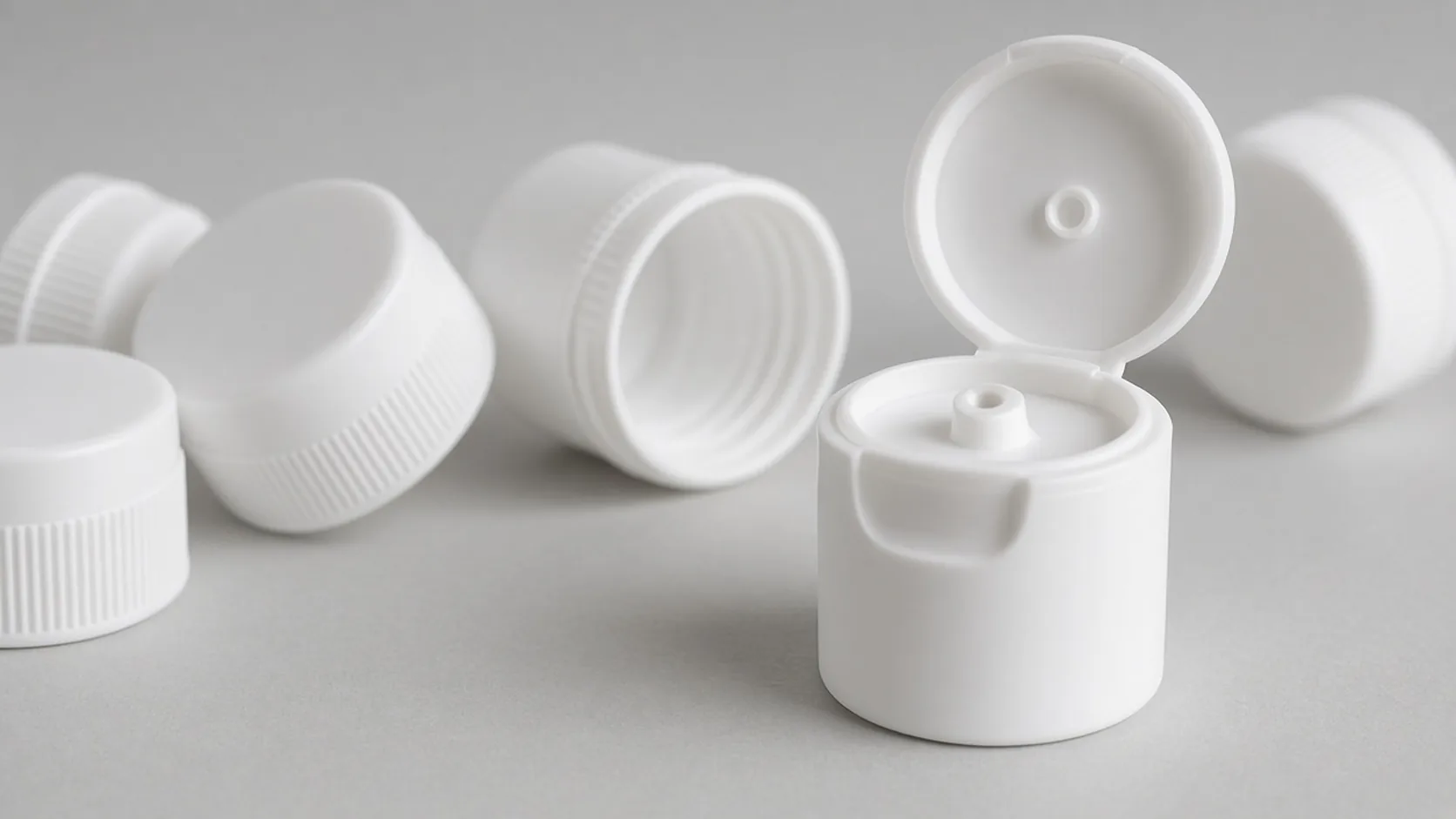
A hopper can stay full while a capper waits for usable closures. Specify the cap-feeding job as bulk loading, orientation and delivery to the next operation, then check each handoff with your actual caps.
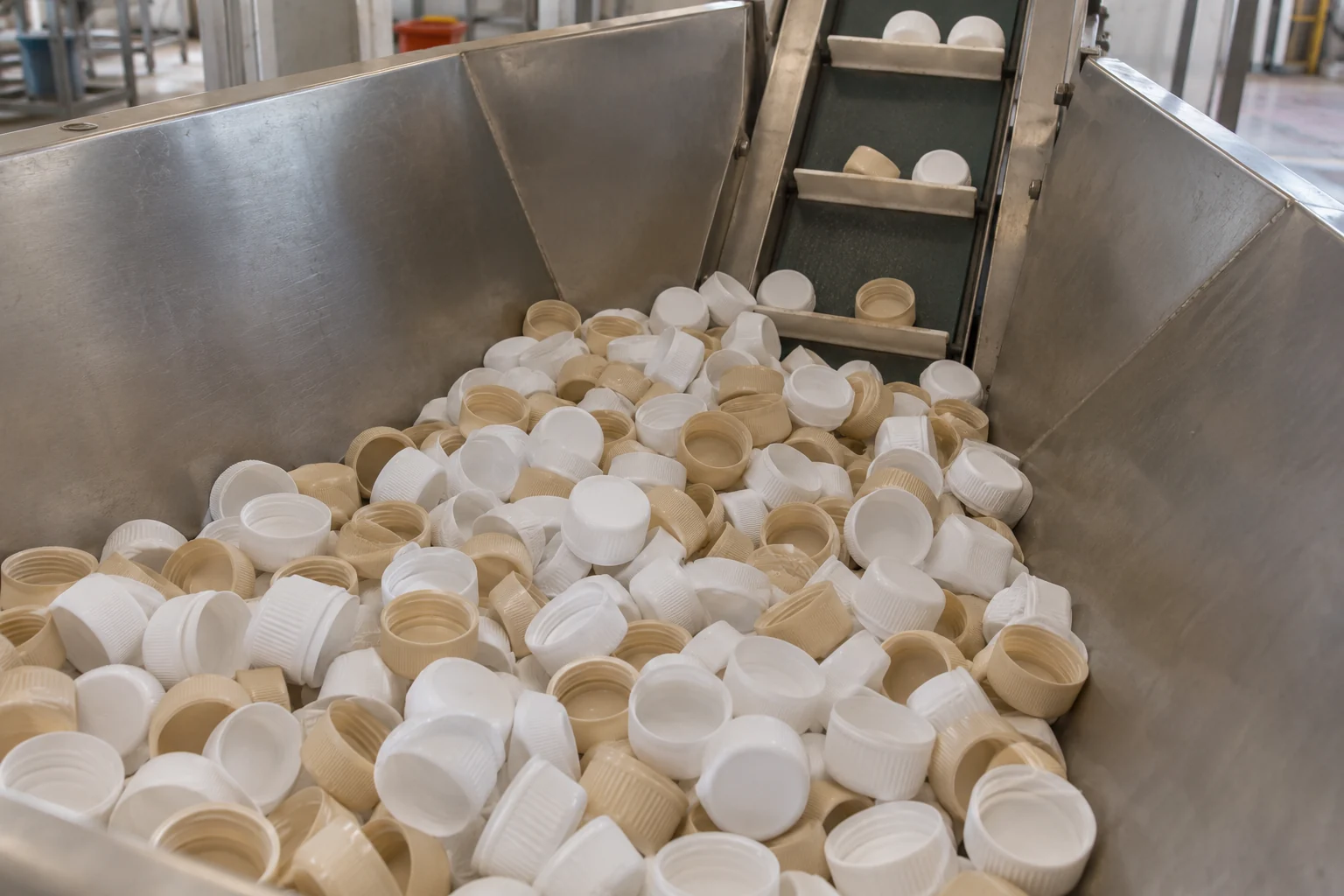
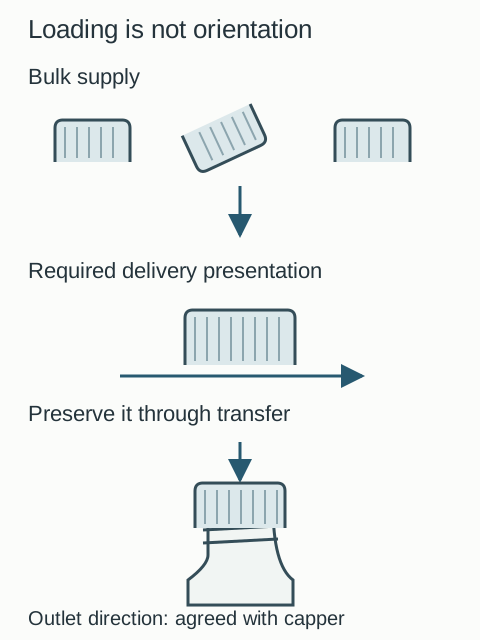
Loading and orientation do different work
Bulk loading replenishes the supply. Orientation establishes the cap’s required presentation, and transfer preserves it to the application point. Suppliers may combine those functions in one unit, but the acceptance questions remain separate.
Accutek’s spindle-cap example describes a bowl using a star wheel and air jets to orient caps before a chute delivers them. It also says the star-wheel and chute dimensions are cap-specific. This is one documented arrangement, not evidence that every bowl, elevator or cap geometry works the same way. SACMI’s post-processing brochure likewise treats cap handling as a defined part of the line.
Describe the cap as a handling object
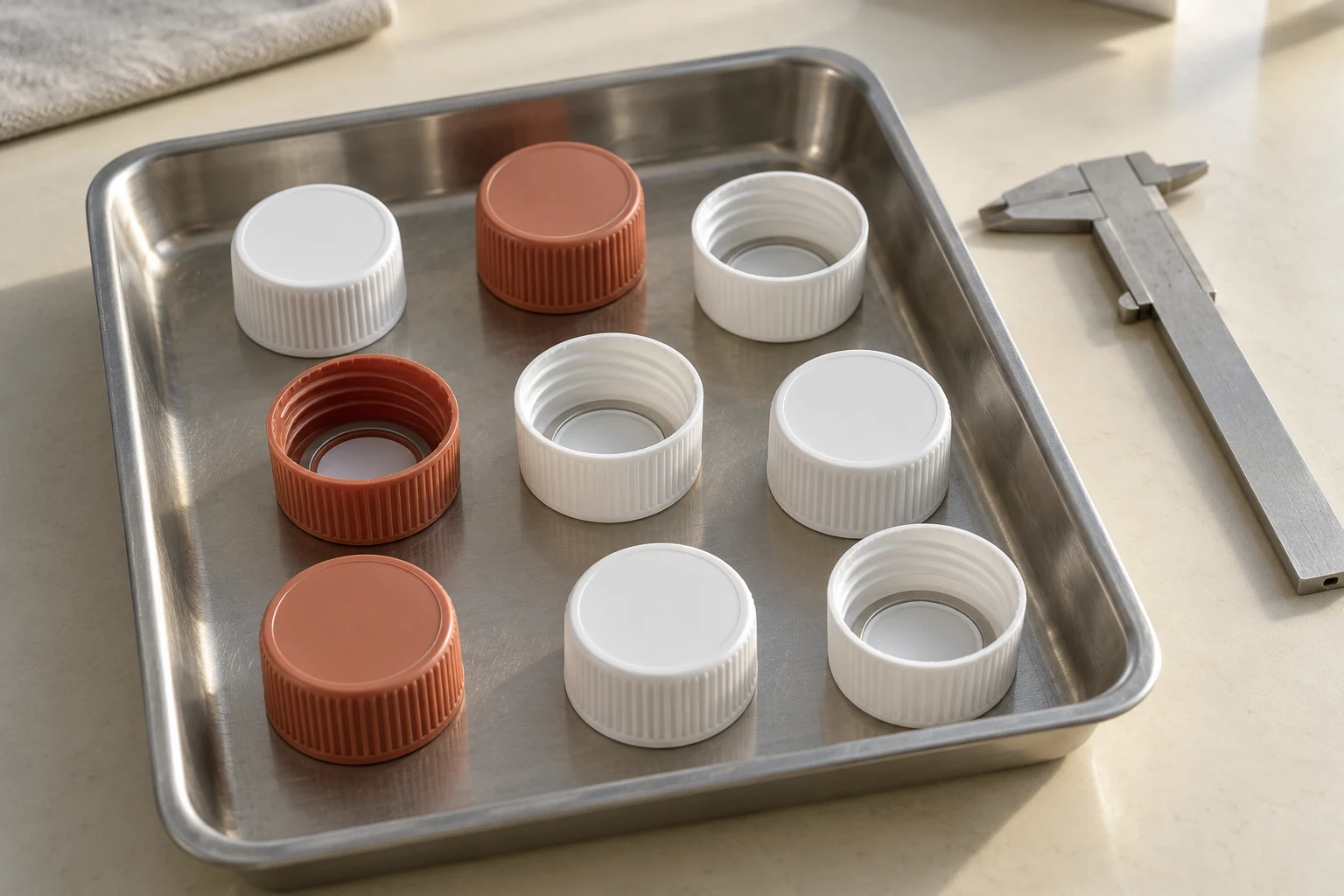
Provide the outer shape and the internal cavity geometry, not just a nominal diameter. Include samples of every intended variant. A cap with a protruding hinge, spout or other feature may need a different presentation from a plain round closure. Ask the supplier to review those features against the proposed rails, pockets and transfer points.
Record how caps arrive at the hopper: packaging format, storage condition and any agreed restrictions on contamination or damage. If the samples used in the trial were selected by hand, say so. A curated sample batch cannot demonstrate the behaviour of a normal production lot with its expected variation.
| Input for the feeder trial | Why it belongs in the record |
|---|---|
| Cap drawing and revisions | Identifies geometry and protruding features |
| Actual variant list | Prevents one colour or design standing in for all variants |
| Production lot and packaging | Gives the samples a traceable arrival condition |
| Required outlet presentation | Defines face direction and any needed angular position |
| Downstream demand and stops | Defines the conditions the feed system must handle |
| Permitted damage or contamination limits | Gives inspection observations a release rule |
Inspect the transfers before changing the sorter
Observe samples at the loader exit, sorter outlet and capper entry. If a correctly oriented cap turns during the final transfer, changing the initial sorter may not address the fault. Retain photographs or video at the actual handoff, and record the setup reference.
Separate missing caps, inverted caps, nested caps and damaged caps in the log. Use only categories that your inspection method can identify. Record whether the cap was already defective on arrival or changed during handling. A repeatable explanation of where damage begins is more useful than a single combined rejection total.
Challenge starts, stops and replenishment
Agree a trial that includes the operating conditions the supplier considers appropriate: normal supply, low supply, replenishment and restart after a controlled downstream stop. Follow the equipment instructions. Do not use this article as an adjustment or guarding procedure.
For each condition, count the caps delivered to the intended inspection point, record interruptions and identify manual intervention. Check that the capper receives caps in the agreed orientation and condition. Any stated output should carry the cap variant and observation period rather than becoming a general feeder rating.
| Trial condition | Observation to retain | Disposition |
|---|---|---|
| Steady operation | Delivered caps, orientation faults and damage | Meets agreed limits / repeat / unresolved |
| Replenishment | Effect of adding the normal cap supply | Record intervention or interruption |
| Downstream stop and restart | Behaviour at the transfer and buffer | Confirm the supplier’s expected recovery |
| Variant change | Tooling and recipe changes, first accepted delivery | Record approved combination |
Keep the final closure test separate. Proper delivery is necessary, but the cap still needs to seat and close on the bottle. A hinged disc adds an orifice and a skirt-versus-disc grip; those checks are in the disc top cap guide. The customer capper handover guide covers that next stage; the vision-inspection guide helps define defect samples.
Methods and sources
Based on Accutek’s published orientation-and-chute example and SACMI’s cap-handling brochure, read in October 2026. The trial conditions are editorial recommendations, not a demonstrated capability or output guarantee. Continue in cap feeding and capping.