A cap producer can ship a dimensionally accepted closure that has not yet been approved on the customer’s capper. Treat line compatibility as a controlled handover of a specific cap, bottle and setup, with faults recorded at the stage where they first appear.
Establish what the customer will actually run
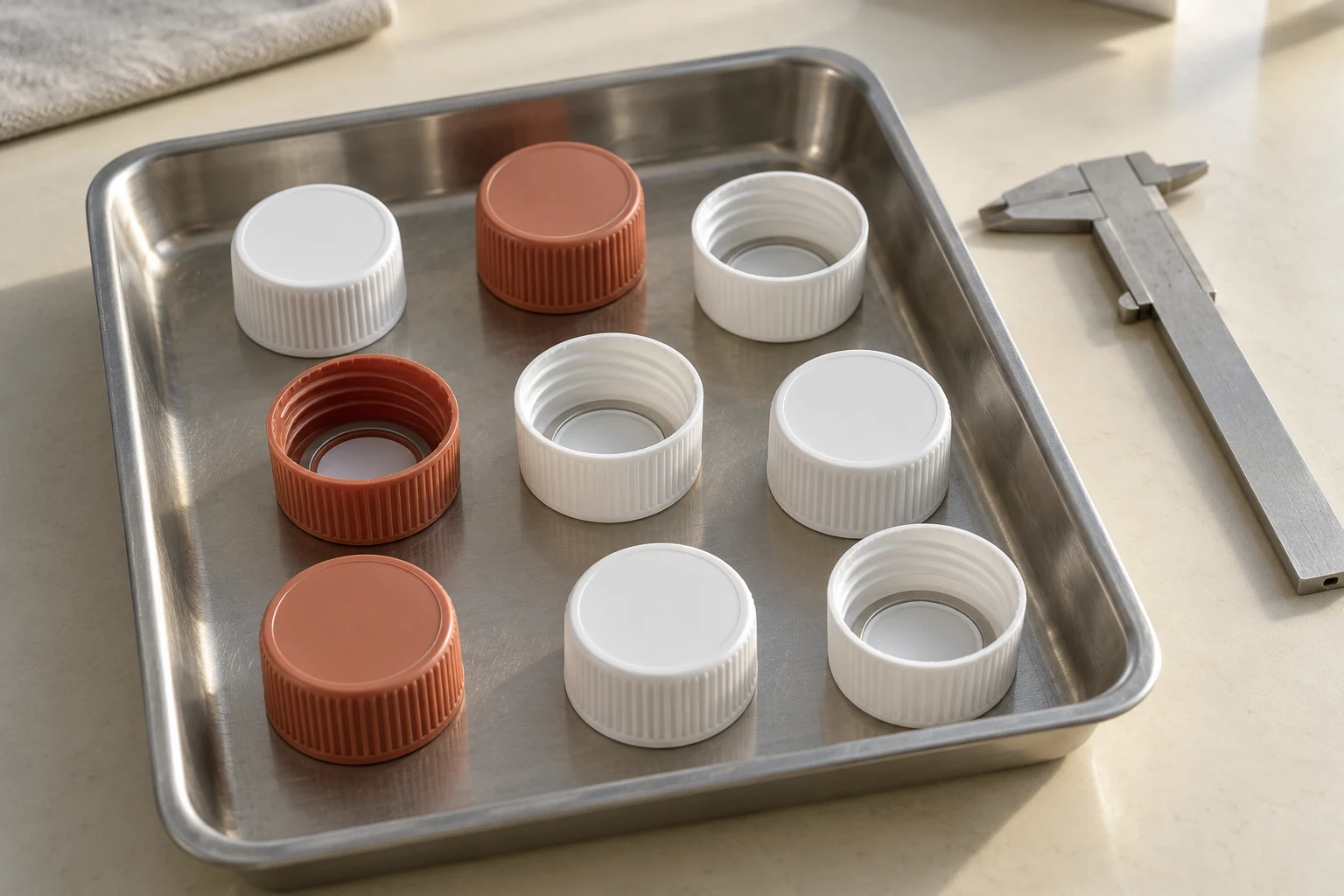
Ask for the bottle drawing and revision, sealing design and intended application equipment. Record the capper’s driving surface and change parts, rather than assuming every machine described as a screw capper will contact the cap in the same way.
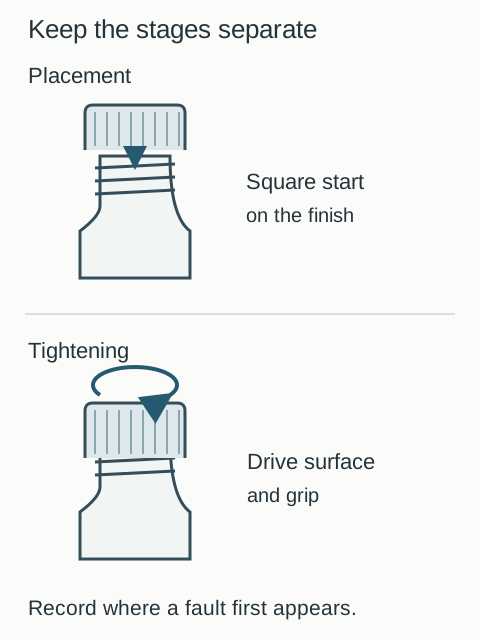
Accutek’s spindle description illustrates why the distinction matters. The published arrangement separates cap placement from the tightening section and identifies the star-wheel and chute dimensions as specific to the cap. A change in a closure can therefore affect its route to the bottle before it reaches the tightening operation.
Supply representative samples with a release note
Identify the cap drawing, resin and colour specification, manufacturing lot and cavity traceability where available. Include the normal packing format and handling instructions. Label specially selected development samples so the customer does not mistake them for an ordinary production lot.
Agree how many lots, cavities and variants the evaluation must cover. This guide does not supply a universal sample size. The scope should reflect the intended release decision and the variation the customer and closure producer need to evaluate.
| Handover item | Closure producer supplies | Customer confirms |
|---|---|---|
| Interface | Cap drawing and sealing-feature definition | Bottle drawing and approved finish |
| Samples | Lot and variant identities; selection history | Evaluation scope and sample receipt condition |
| Handling | Packing and permitted contact information | Feeder, chute and capper-tool references |
| Application | Current closure application guidance | Setup used and operating conditions |
| Approval | Known deviations and retained references | Accepted combination and unresolved exceptions |
Split the trial into observable stages
Check caps before loading, at the feeder outlet, at first bottle engagement and after tightening. Keep those observations linked to the run record. If scuffing appears before the bottle, retain both the incoming and affected cap. If the cap arrives tilted, separate that finding from torque or opening variation.
A useful fault record states the symptom, first observed stage and sample identity. Avoid assigning a root cause from appearance alone. For example, a damaged thread after a trial could involve the incoming component, misaligned placement or the closing operation. The samples and sequence help decide which explanation to investigate.
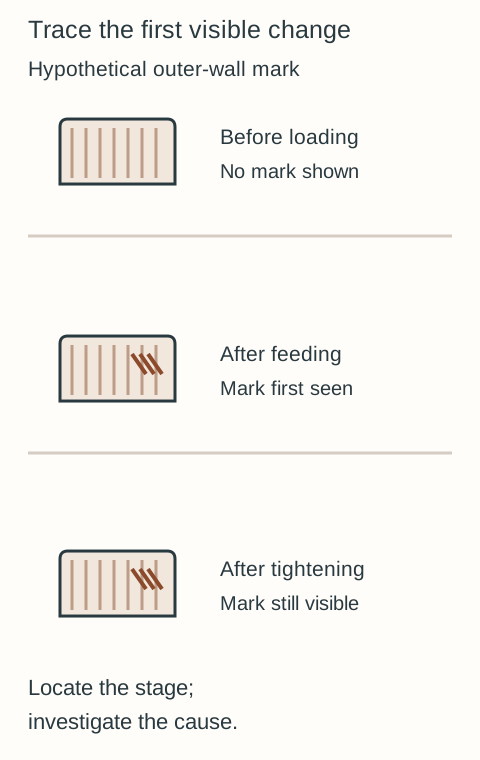
In the illustrated example, the first visible change is at the feeder outlet. Inspect that handoff and retain the linked samples before blaming the tightening section. The actual trial record must identify the sample group and viewing direction at each stage; a different viewing angle can hide a mark.
Connect dimensions to package function
Confirm that the closure meets its drawing using the agreed measurement methods, then assess the assembled package against the customer’s approved criteria. Seating, leakage, tamper-feature behaviour and opening can require separate checks. A cap dimensional report is not a substitute for a package trial, and one successful hand assembly does not define the production operating window.
For torque data, record the instrument, units, endpoint and time after application. Mark-10 distinguishes application and removal torque in its TT01 product description. Do not combine the capper’s recipe input with the customer’s opening measurement as though they were the same variable.
| Fault record field | Entry |
|---|---|
| Sample and run | Cap lot, bottle lot, run ID and capper setup reference |
| First affected stage | Incoming, feeding, engagement, tightening or later check |
| Observation | Photograph and description without an assumed cause |
| Measurement | Method, units, conditioning and specification revision |
| Next check | One controlled change or measurement to examine the proposed cause |
| Final decision | Accepted, repeat required or unresolved, with owner |
Blank fault entry
Copy one entry for each observed fault. Keep an undefined measurement blank. Enter a unit with every numerical reading and use the same unit when comparing results for the same endpoint. Record elapsed time since capping in minutes where it applies; this worksheet supplies no acceptance limits.
| Record field | Blank entry |
|---|---|
| Sample ID / group / viewing direction | ____ / ____ / ____ |
| Cap lot / bottle lot / drawing pair | ____ / ____ / ____ |
| Run / capper setup reference | ____ / ____ |
| First stage showing change | ____ |
| Observation and image reference | ____ |
| Measurement endpoint / value / unit | ____ / ____ / ____ |
| Elapsed since capping, min | ____ |
| Method and limit reference | ____ |
| Next controlled check / owner | ____ / ____ |
| Disposition | ____ |
Download the blank fault-record TSV. The fields record observations and supplier-approved methods; they do not calculate a cause or substitute for a package acceptance specification.
Limit the approval to the tested combination
Record the accepted drawing pair and setup. Define which changes need review: geometry, material, colour where relevant to handling or inspection, tooling and packing format. Keep an approved retained sample set and make the revision history available to both parties.
The drawing-release guide addresses the producer’s interface records. The feeding-system guide provides the upstream trial structure.
Methods and sources
Based on the published Accutek placement-and-tightening description and Mark-10’s application/removal measurement scope, accessed October 2026. The handover tables are editorial recommendations, not a completed trial, equipment endorsement or universal acceptance method. Continue in cap feeding and capping.